Internet Explorer (IE) was once the most popular web browser in the world, but its decline was inevitable as newer and better browsers emerged. In this article, we will look back at the history of IE, from its origins to its demise, and explore the factors that contributed to its rise and fall.
Origins and Early Versions (1995-1997)
IE was derived from Spyglass Mosaic, a web browser developed by Spyglass Inc., which in turn was based on the original Mosaic browser from the National Center for Supercomputing Applications (NCSA). Microsoft licensed Spyglass Mosaic in 1994 and modified it to create IE .

The first version of IE was released in August 1995 as part of Microsoft Plus! add-on for Windows 95 and as an OEM release for Windows 95 PCs . It was a basic browser that supported HTML, SSL, cookies, and Internet newsgroups. Version 1.5 followed in early 1996 for Windows NT, with support for tables .
Version 2.0 was released in November 1995 for both Windows 95 and Windows NT, with improved features such as VRML, frames, and Java applets . It was also released for Macintosh and Windows 3.1 in April 1996. Version 2.0 was bundled with Microsoft’s Internet Starter Kit for Windows 95, which included a how-to book and 30 days of Internet access on MSN .
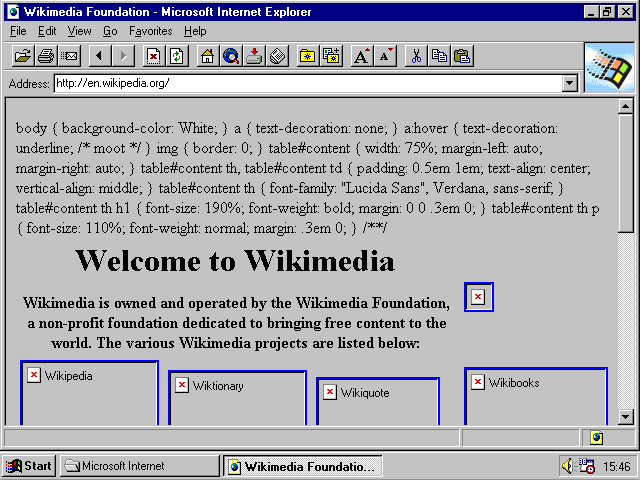
Version 3.0 was released in August 1996 as a free download for Windows users . It was a major upgrade that introduced many new features such as Cascading Style Sheets (CSS), ActiveX controls, plug-ins, JavaScript, and offline browsing . It also included Internet Mail and News 1.0 and the Windows Address Book . Version 3.0 was the first version of IE to support the World Wide Web Consortium (W3C) HTML standards .
The Browser Wars and Dominance (1997-2003)
The release of IE 3.0 marked the beginning of the browser wars, a fierce competition between Microsoft and Netscape, the maker of the dominant browser at the time, Netscape Navigator. Microsoft used its market power to distribute IE with Windows, making it the default browser for millions of users. It also offered IE for free, undercutting Netscape’s revenue model. Microsoft also invested heavily in developing and promoting IE, adding new features and technologies that surpassed Netscape’s capabilities.
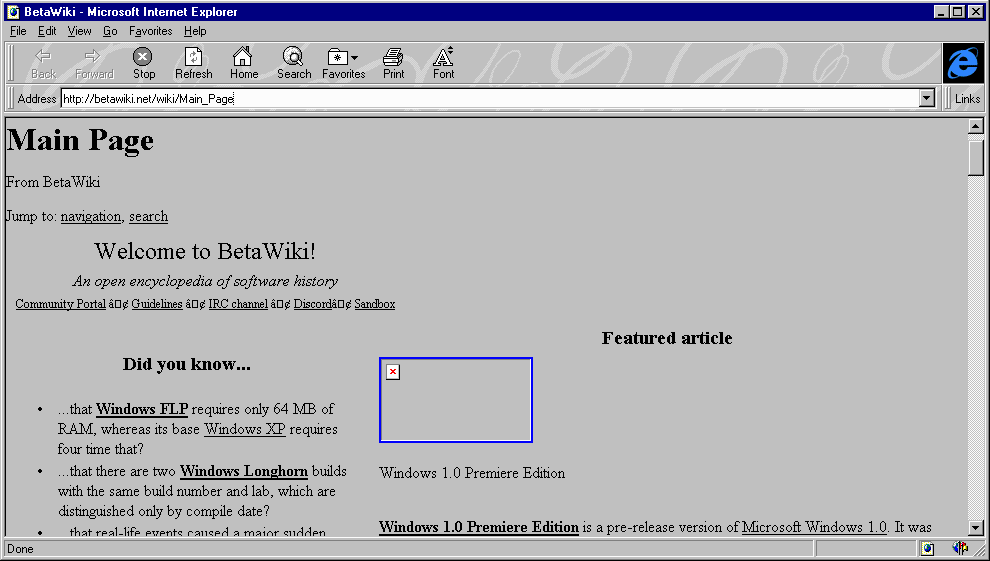
Version 4.0 was released in September 1997 for Windows 95, Windows NT, and Windows 98 . It was a major overhaul that integrated IE with the Windows desktop, allowing users to browse local files and web pages in the same interface . It also introduced Dynamic HTML (DHTML), which enabled web pages to change without reloading . It also supported SSL 3.0, cookies 2.0, and HTTP 1.1 .
Version 5.0 was released in March 1999 for Windows 98, Windows NT, and Windows 2000 . It was a minor update that improved performance, stability, and compatibility . It also added support for XML, XSLT, HTML 4.01, CSS 2.0, and bi-directional text . It also included Outlook Express 5.0 and Windows Media Player 6.2 .
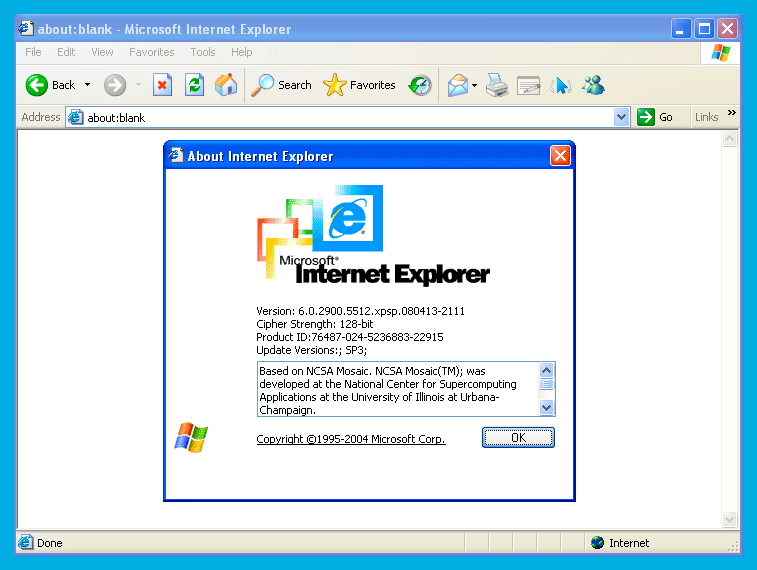
Version 6.0 was released in August 2001 for Windows XP and Windows Server 2003 . It was the last major version of IE for Windows before the release of IE 7 in 2006 . It added support for PNG images, DHTML behaviors, content restrictions, and platform for privacy preferences (P3P) . It also included Internet Explorer Administration Kit (IEAK) and Internet Connection Sharing (ICS) .
By the early 2000s, IE had become the dominant browser in the world, with a market share of over 90% . However, this also made it a target for security attacks, malware, and spyware, which exploited its vulnerabilities and flaws. IE also faced criticism for its lack of adherence to web standards, its proprietary extensions, and its integration with Windows, which raised antitrust concerns.
The Decline and End (2003-2021)
The decline of IE began with the emergence of new competitors, such as Mozilla Firefox and Google Chrome, which offered faster, more secure, and more standards-compliant browsers. These browsers also introduced features such as tabbed browsing, extensions, and incognito mode, which IE lacked or implemented poorly. IE also suffered from a lack of innovation and development, as Microsoft focused on other products and services.
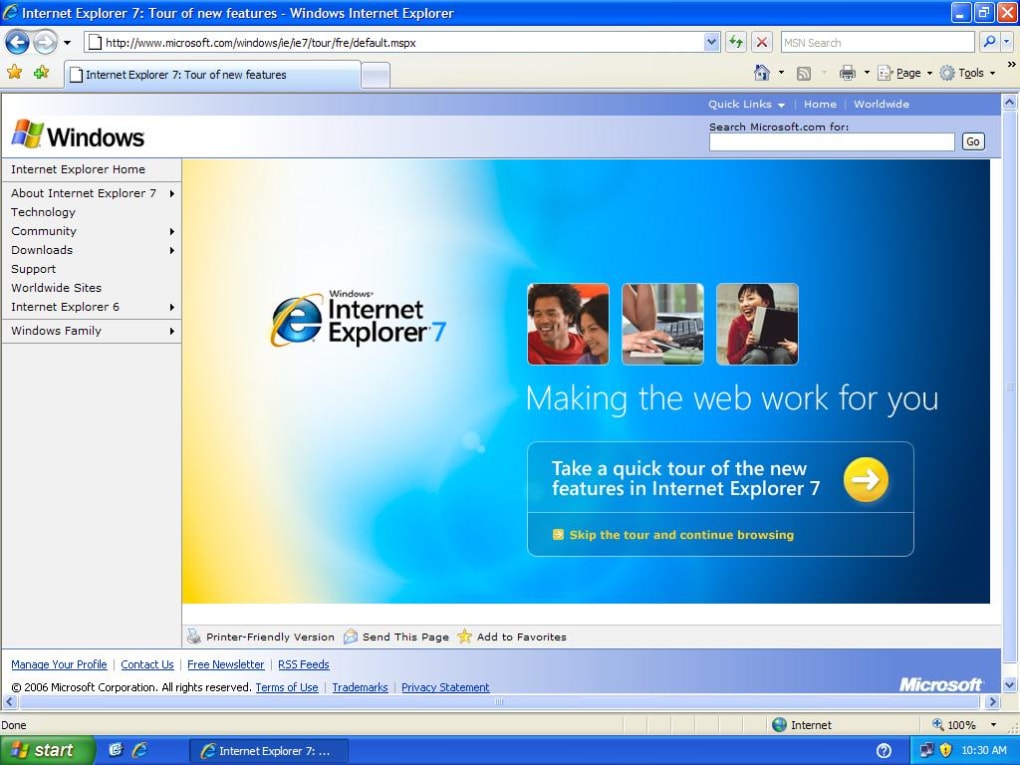
Version 7.0 was released in October 2006 for Windows XP and Windows Vista . It was the first major update of IE in five years, and it aimed to address some of the issues that plagued IE 6 . It added support for tabbed browsing, RSS feeds, phishing filter, and improved CSS support . It also removed the integration with Windows Explorer and enhanced the security and privacy settings .
Version 8.0 was released in March 2009 for Windows XP, Windows Vista, and Windows 7 . It was the last version of IE to run on Windows XP . It added support for HTML 5, CSS 3, SVG, DOM level 2 events, and web slices . It also introduced a compatibility mode, which allowed users to view web pages designed for older versions of IE .
Version 9.0 was released in March 2011 for Windows Vista and Windows 7 . It was the first version of IE to use hardware acceleration for rendering graphics and text . It also added support for canvas, geolocation, web workers, and web storage . It also improved the performance, security, and user interface of IE .
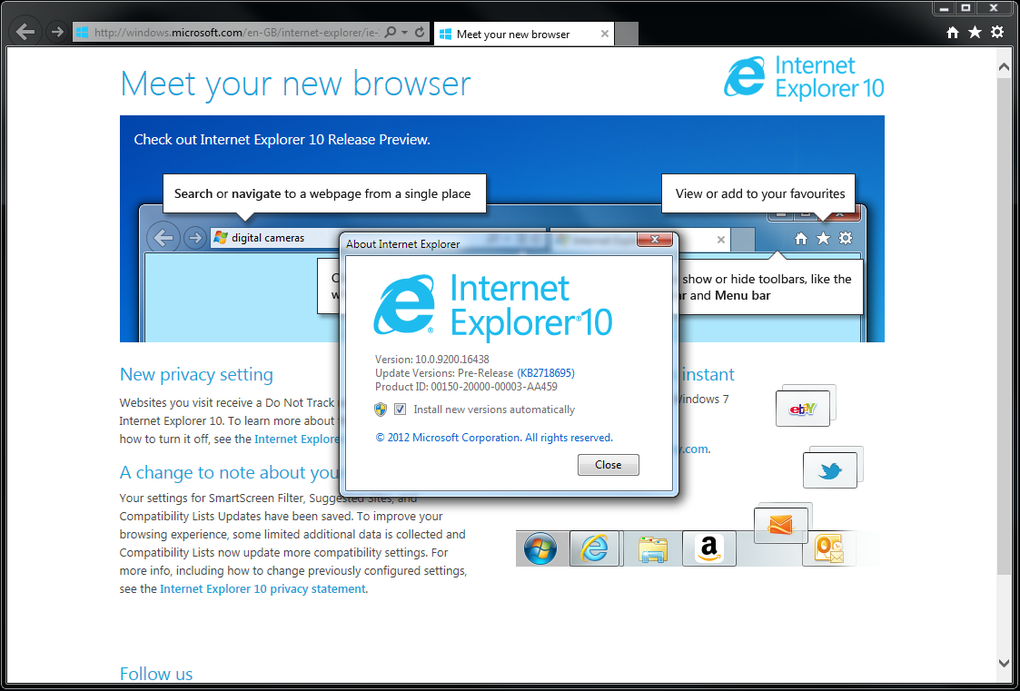
Version 10.0 was released in October 2012 for Windows 8 and Windows RT . It was the first version of IE to run on ARM-based devices . It added support for touch input, web sockets, IndexedDB, and file API . It also improved the compatibility with web standards and removed some legacy features such as ActiveX controls and browser helper objects (BHOs).
Version 11.0 was released in October 2013 for Windows 8.1 and Windows RT 8.1 . It was later released for Windows 7 and Windows Server 2008 R2 in November 2013. It was the last version of IE to be developed by Microsoft . It added support for WebGL, SPDY, and ECMAScript 6 . It also improved the performance, security, and developer tools of IE .
In January 2015, Microsoft announced that it would replace IE with a new browser, codenamed Project Spartan, later named Microsoft Edge . Edge was designed to be a modern, lightweight, and cross-platform browser that would run on Windows 10, iOS, Android, and macOS . Edge was based on a new rendering engine, EdgeHTML, which was forked from IE’s Trident engine .
In March 2015, Microsoft released the first public preview of Edge for Windows 10 . In July 2015, Microsoft released the final version of Edge for Windows 10, along with IE 11 as a legacy option . In August 2016, Microsoft released the first version of Edge for iOS and Android . In January 2020, Microsoft released the first version of Edge based on Chromium, an open-source browser engine developed by Google .

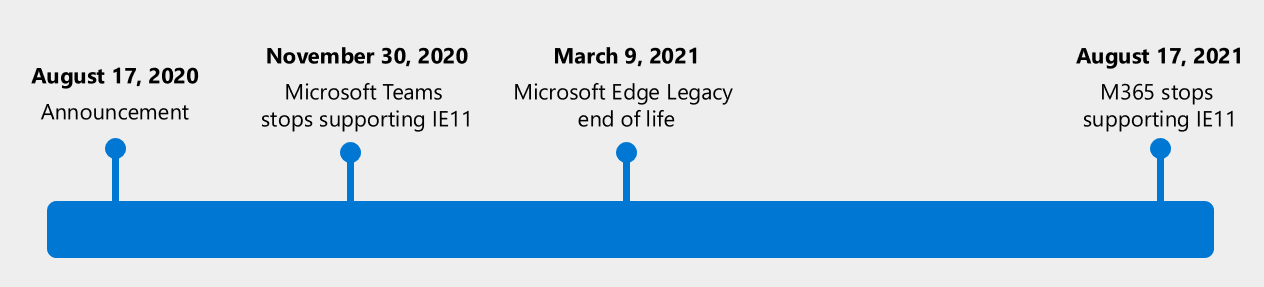
In August 2020, Microsoft announced that it would end support for IE 11 across its Microsoft 365 apps and services by August 2021 . In May 2021, Microsoft announced that it would retire IE 11 from Windows 10 by June 2022 . In June 2021, Microsoft announced that it would disable IE 11 through a Microsoft Edge update on certain versions of Windows 10 by November 2021 .