

In a world where time is of the essence and distances seem to shrink, transportation technology has continuously evolved to meet the demands of a fast-paced society. Enter the era of Hyperloop and Maglev trains, two revolutionary concepts that promise to redefine high-speed transportation as we know it. With their futuristic designs and innovative approaches, these technologies hold the potential to transform the way we travel, making journeys faster, more efficient, and environmentally friendly.
The Hyperloop Phenomenon
First proposed by Elon Musk in 2013, the Hyperloop concept captured the imagination of engineers, innovators, and transportation enthusiasts worldwide. At its core, the Hyperloop is a high-speed transportation system that uses a network of low-pressure tubes to propel passenger pods at incredible speeds, reaching up to 700 miles per hour or more.

The key to the Hyperloop’s speed lies in its innovative design. By reducing air resistance and friction within the tubes, the Hyperloop can achieve speeds that surpass those of traditional trains and even commercial airplanes. Magnetic levitation, combined with a near-vacuum environment, allows the pods to glide smoothly along the track, minimizing energy consumption and maximizing efficiency.
One of the most promising aspects of the Hyperloop is its potential to revolutionize long-distance travel. With the ability to connect major cities in record time, the Hyperloop could significantly reduce travel times and congestion on highways and airports. Imagine being able to travel from Los Angeles to San Francisco in under an hour, or from New York to Washington D.C. in just 30 minutes. The possibilities are endless.
The Rise of Maglev Technology
While the Hyperloop has garnered much attention in recent years, Maglev technology has been quietly revolutionizing high-speed rail transportation for decades. Maglev, short for magnetic levitation, uses powerful magnets to suspend trains above the tracks, eliminating friction and allowing for incredibly smooth and efficient travel.
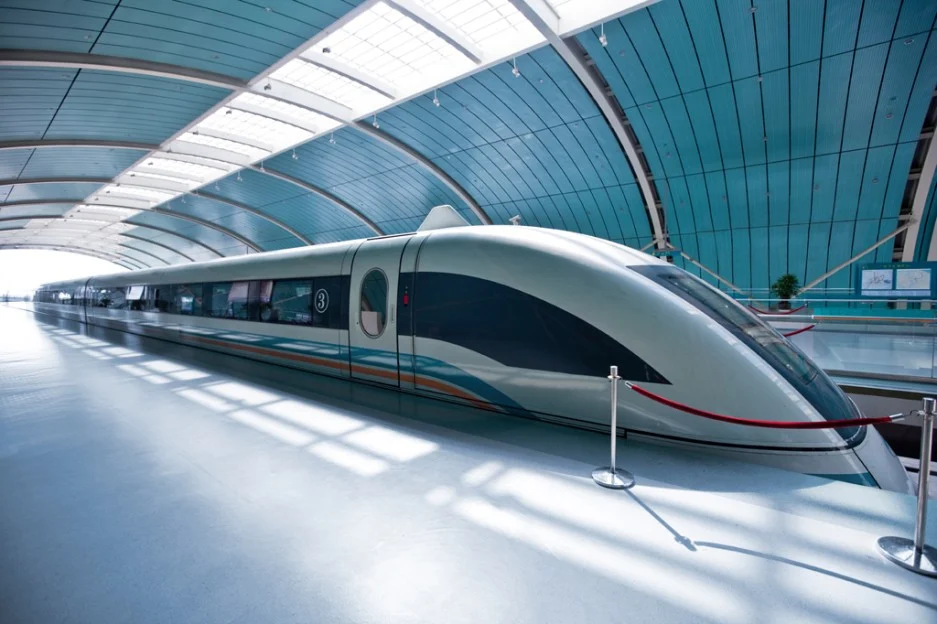
One of the most notable examples of Maglev technology is the Shanghai Maglev Train in China, which holds the title of the world’s fastest commercial train service. With a top speed of 268 miles per hour, the Shanghai Maglev Train can whisk passengers from Pudong International Airport to the city center in just over seven minutes, a journey that would take over 40 minutes by car.
The benefits of Maglev technology extend beyond speed. Unlike traditional trains that rely on wheels and tracks, Maglev trains hover above the rails, resulting in minimal wear and tear and reduced maintenance costs. Additionally, Maglev trains produce zero emissions during operation, making them an environmentally friendly alternative to conventional diesel-powered trains.
The Future of High-Speed Transportation
As Hyperloop and Maglev technologies continue to mature, the future of high-speed transportation looks brighter than ever. Governments, corporations, and researchers around the world are investing billions of dollars into research and development, with the goal of bringing these groundbreaking technologies to fruition.
One of the most significant challenges facing Hyperloop and Maglev projects is the construction of infrastructure. Building the necessary networks of tubes and tracks requires substantial investment and coordination between governments, private companies, and regulatory agencies. However, with the potential to revolutionize transportation on a global scale, the benefits far outweigh the challenges.

In addition to reducing travel times and congestion, Hyperloop and Maglev technologies have the potential to spur economic growth and development in regions that were previously inaccessible. By connecting cities and urban centers more efficiently, these technologies could open up new opportunities for commerce, tourism, and cultural exchange.
Moreover, the environmental benefits of Hyperloop and Maglev transportation cannot be overstated. By offering a clean and sustainable alternative to fossil fuel-powered vehicles and airplanes, these technologies could play a crucial role in reducing greenhouse gas emissions and mitigating the impacts of climate change.
Conclusion
In conclusion, Hyperloop and Maglev trains represent the next frontier in high-speed transportation. With their innovative designs, incredible speeds, and minimal environmental impact, these technologies have the potential to revolutionize the way we travel, work, and live. While challenges remain, the collective effort of governments, businesses, and researchers will continue to push the boundaries of what is possible, ushering in a new era of connectivity and progress.
As we look to the future, it is clear that Hyperloop and Maglev trains are not just modes of transportation, but symbols of human ingenuity and ambition. In a world where every minute counts, these technologies offer a glimpse of what is possible when we dare to dream and push the limits of innovation. The future of high-speed transportation is here, and it’s full of promise and possibility.