
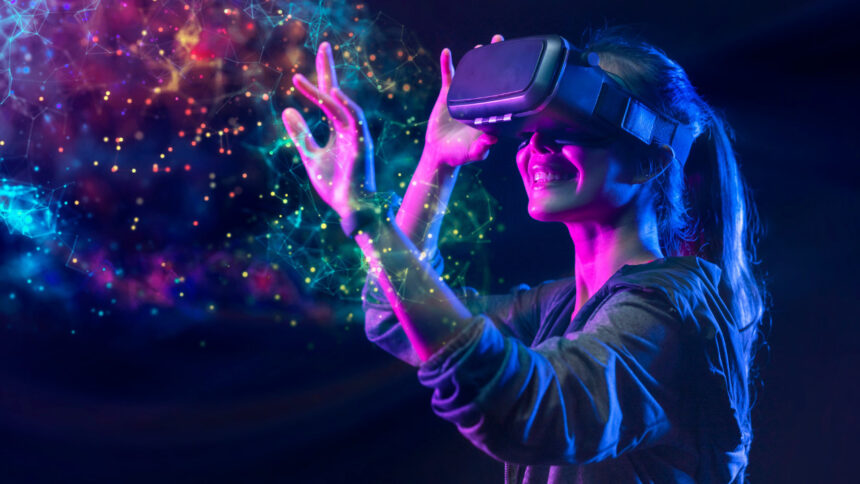
Augmented reality, also known as AR, is a ground-breaking technology that superimposes digital information and virtual objects onto the real world. This improves both our perception of the environment and our ability to interact with it. Augmented reality (AR) is revolutionising industries, delivering one-of-a-kind experiences, and redefining the way we work, study, and interact with the world. It does this by combining the physical and digital worlds in a seamless way. In this piece, we will investigate the enormous potential of augmented reality, as well as its fundamental ideas, real-world applications, and the influence it is having on a variety of industries.
Enhancing Real-World Experiences:
By superimposing digital information on top of the real world, augmented reality (AR) makes experiences in the real world more engaging. Users are able to interact with digital items, get information, and visualise virtual aspects in their surroundings when they utilise mobile devices such as smartphones and tablets, as well as wearable computing devices such as smart glasses and headsets. AR provides real-time information that is aware of its context and enhances our everyday experiences. This information can be used to overlay directions on a real-time map, indicate sites of interest, or translate foreign languages while we are on the go, for example.
Revolutionizing Industry Applications:
AR is having a transformative effect on a variety of different businesses by providing solutions that are both inventive and practical. Augmented reality (AR) provides workers with real-time instructions and virtual models in the manufacturing industry. This helps to improve productivity and reduce errors. When it comes to architecture and interior design, augmented reality (AR) gives clients the ability to visualise how buildings and furniture will look in their actual environment. AR enables retailers to provide customers with virtual try-on experiences, which let buyers evaluate how things will seem or how well they will fit before they commit to making a purchase. These are just a few instances of the ways in which augmented reality (AR) is revolutionising businesses by improving efficiency, accuracy, and interaction with customers.
Immersive Education and Training:
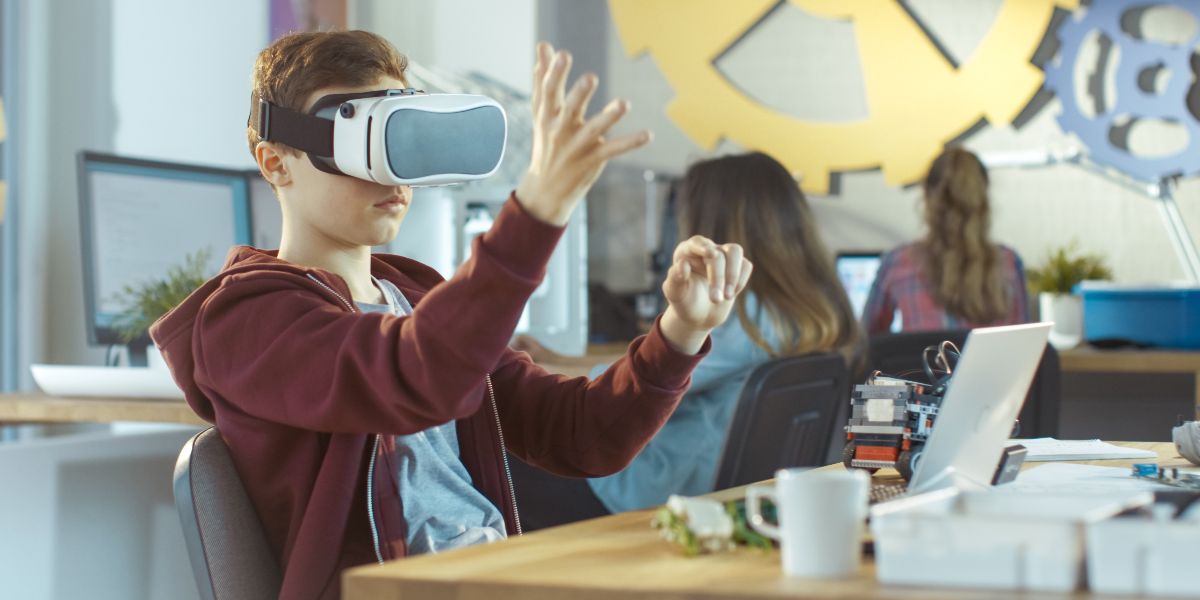
Education and training are two areas that stand to benefit greatly from AR’s use. The process brings learning to life by superimposing virtual models, animations, or interactive material over the things in the real world. Students have the opportunity to investigate historical events, investigate scientific topics, or dissect virtual organisms, all of which increase engagement and improve comprehension. Additionally, AR is capable of providing training simulations, which allow experts in sectors such as medical, aviation, and the military to practise complicated processes or scenarios in an environment that is both safe and under control.
Enhanced Communication and Collaboration:
By providing remote help and shared augmented experiences, augmented reality (AR) completely revolutionises communication and cooperation. The live view of a worker or technician can have instructions superimposed on top of it so that remote specialists can provide them with real-time guidance. No matter where they are located, members of a team are able to communicate effectively and work together by simultaneously exchanging digital content, annotations, and virtual objects. This functionality encourages effective communication, increases productivity, and facilitates seamless cooperation across a wide range of sectors.

Gaming and Entertainment:
The AR gaming and entertainment industries have both seen substantial progress because to the technology. It gives users the ability to interact with virtual characters and items that are located in their real-world environments. Games that combine the real and virtual worlds, such as Pokémon Go and Harry Potter: Wizards Unite, have successfully captured the attention of millions of players. AR also improves live performances and events by superimposing digital effects onto live shows, concerts, or sporting events. As a result, audiences are provided with experiences that are both compelling and immersive.
The way we experience, interact with, and engage with the environment that surrounds us is being fundamentally altered by the advent of augmented reality. Augmented reality (AR) is altering businesses, boosting learning experiences, facilitating communication, and offering immersive entertainment. It does this by mixing the real and virtual worlds together in a seamless way. It is reasonable to anticipate that as augmented reality (AR) technology continues to improve, even more extraordinary applications and life-altering experiences will become available, which will radically alter the ways in which we work, study, and investigate our environment. The use of augmented reality is helping to close the gap between real life and the realm of the imagination, which is opening up a whole new universe of opportunities.