
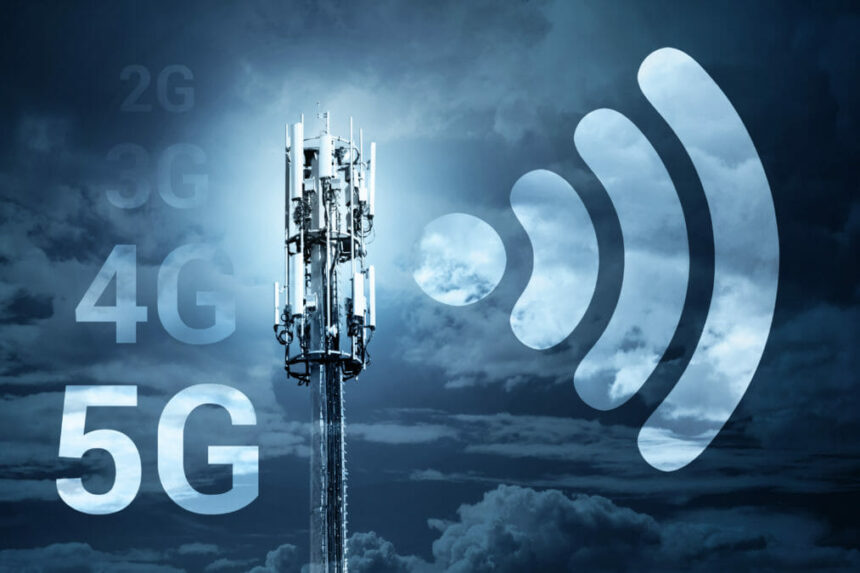
Connectivity is very important in our daily lives, especially in today’s digital age. As technology advances, we require faster and more dependable networks. 5G is the fifth generation of wireless technology that is expected to change the way we connect, communicate, and interact with the world. This article will discuss 5G, including its main features, possible uses, and how it will revolutionise different industries.
Let’s talk about speed and bandwidth.
5G has really fast speed and can handle a lot of data at once, which is a big advantage. 5G is expected to provide faster download and upload speeds than 4G, with peak data rates of up to 10 Gbps. The high-speed internet will allow us to watch 4K and 8K videos without any interruptions, transfer files quickly, and have a smooth experience while using the internet. This will change the way we use and share content.
Low Latency and Real-Time Responsiveness:
5G has low latency which means that data can travel faster between devices and networks. Having a latency as low as 1 millisecond is important for real-time responsiveness, especially for applications such as autonomous vehicles, remote surgeries, and industrial automation. This fast communication will change industries that need quick decision-making and responsive systems.
Massive Device Connectivity:
The purpose of 5G is to enable a large number of devices to be connected at the same time. Under 5G, the Internet of Things (IoT) will thrive and allow for the easy integration of billions of devices, sensors, and machines. 5G technology will enable vast device connectivity, leading to innovation and a more connected and efficient world in areas such as smart homes and cities, industrial automation, and healthcare.
Enhanced Reliability and Coverage:
The 5G networks are more reliable and have better coverage, which means that you can stay connected even in busy cities or faraway places. Having increased reliability is very important for applications that are critical for missions such as emergency services, remote diagnostics, and remote monitoring. Moreover, the stable connections provided by 5G in challenging environments will be advantageous for industries like transportation, logistics, and agriculture.
The applications of 5G technology are not limited to just faster smartphones and better internet browsing. It has a transformative impact on various industries. It has the potential to revolutionise various industries, including:
5G technology will make it possible to perform surgeries remotely, provide medical consultations through telemedicine, and monitor patients in real-time. This will greatly improve the way healthcare is delivered and make it more accessible to people.
Cities can use 5G technology to improve efficiency by managing traffic intelligently, distributing energy in an optimised way, and providing better public services.
The use of 5G technology in manufacturing will make it easier to create smart factories, use robotics, and automate industrial processes. This will lead to increased productivity and efficiency.
5G technology will be used to power connected and autonomous vehicles, making roads safer, traffic management more efficient, and improving the overall experience for passengers.
Under 5G, immersive experiences, virtual reality, and augmented reality will become more popular in the entertainment industry. This will change the way we enjoy and interact with entertainment.
In conclusion, 5G is a major advancement in wireless technology that offers faster speeds, lower latency, increased connectivity, and has the potential to revolutionise various industries. As 5G networks become more widespread around the world, we can anticipate a future where connectivity is smooth, devices are linked, and instant interactions are commonplace. There are many possibilities with the new 5G era. It will change the way we live, work, and communicate.