

Quantum computing is a rapidly evolving field that promises to revolutionize many domains of science, technology, and society. Quantum computers use the principles of quantum mechanics to process information in a fundamentally different way than classical computers, potentially enabling them to solve problems that are intractable or impractical for conventional machines. However, building and operating quantum computers also poses significant challenges that require overcoming technical, theoretical, and practical hurdles.
What is quantum computing and why is it important?
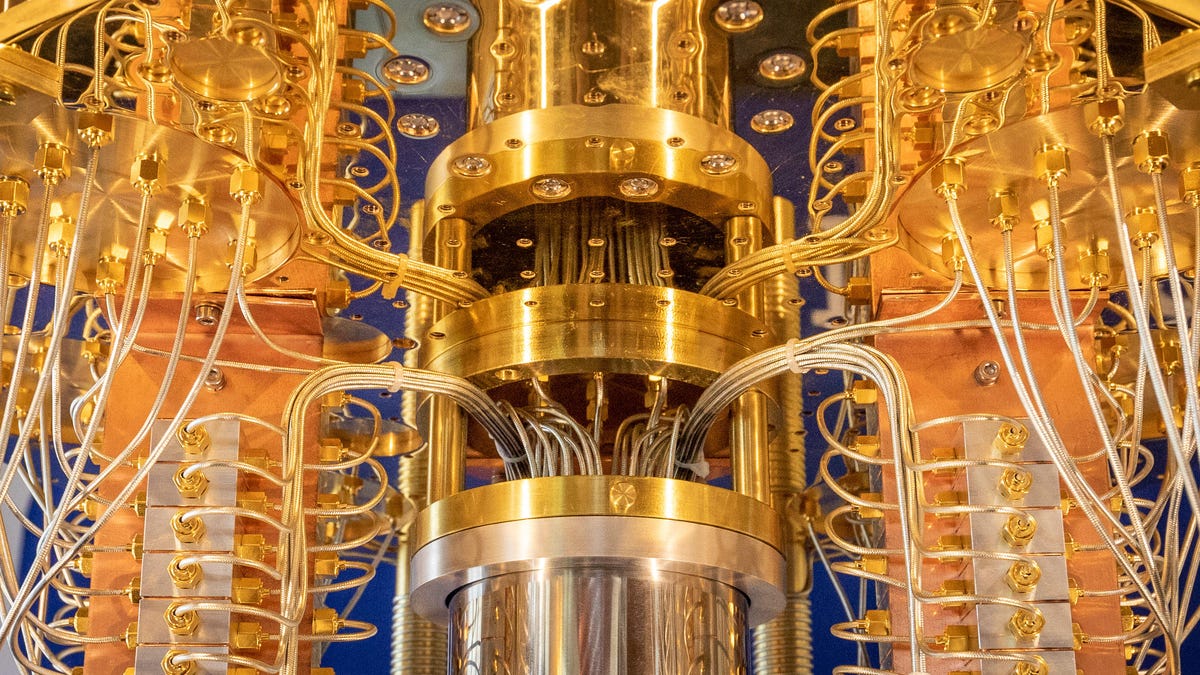
Quantum computing is based on the idea of using quantum bits, or qubits, as the basic units of information. Unlike classical bits, which can only be in one of two states (0 or 1), qubits can exist in a superposition of both states at the same time, as well as in an entangled state with other qubits. This means that a quantum computer can manipulate and store information in a much more complex and parallel way than a classical computer, potentially allowing it to perform certain tasks faster or more efficiently.

Some of the potential applications of quantum computing include:
- Cryptography: Quantum computers could break some of the most widely used encryption schemes that secure online communications and transactions, such as RSA and ECC. On the other hand, quantum computers could also enable new forms of quantum cryptography that are provably secure against any adversary.
- Optimization: Quantum computers could find optimal solutions to complex problems that involve many variables and constraints, such as scheduling, routing, logistics, machine learning, and artificial intelligence.
- Simulation: Quantum computers could simulate physical systems that are too complex or large for classical computers to handle, such as molecular dynamics, quantum chemistry, materials science, and quantum physics.
- Machine learning: Quantum computers could enhance the capabilities of machine learning algorithms by exploiting quantum parallelism, interference, and entanglement, leading to faster and more accurate results.
What are the current state and trends of quantum computing?
Quantum computing has made significant progress in recent years, thanks to the efforts of researchers, companies, and governments around the world. Some of the notable milestones and developments include:
- Quantum supremacy: In 2019, Google claimed to have achieved quantum supremacy, the point where a quantum computer can perform a task that is beyond the reach of any classical computer. Google used a 53-qubit superconducting processor called Sycamore to execute a random quantum circuit in 200 seconds, which would take a state-of-the-art supercomputer about 10,000 years to do.

- Quantum advantage: In 2020, Chinese researchers reported achieving quantum advantage, the point where a quantum computer can perform a practical task faster or better than a classical computer. They used a 76-photon quantum processor called Jiuzhang to sample from a distribution of random numbers in 200 seconds, which would take a supercomputer about 2.5 billion years to do.
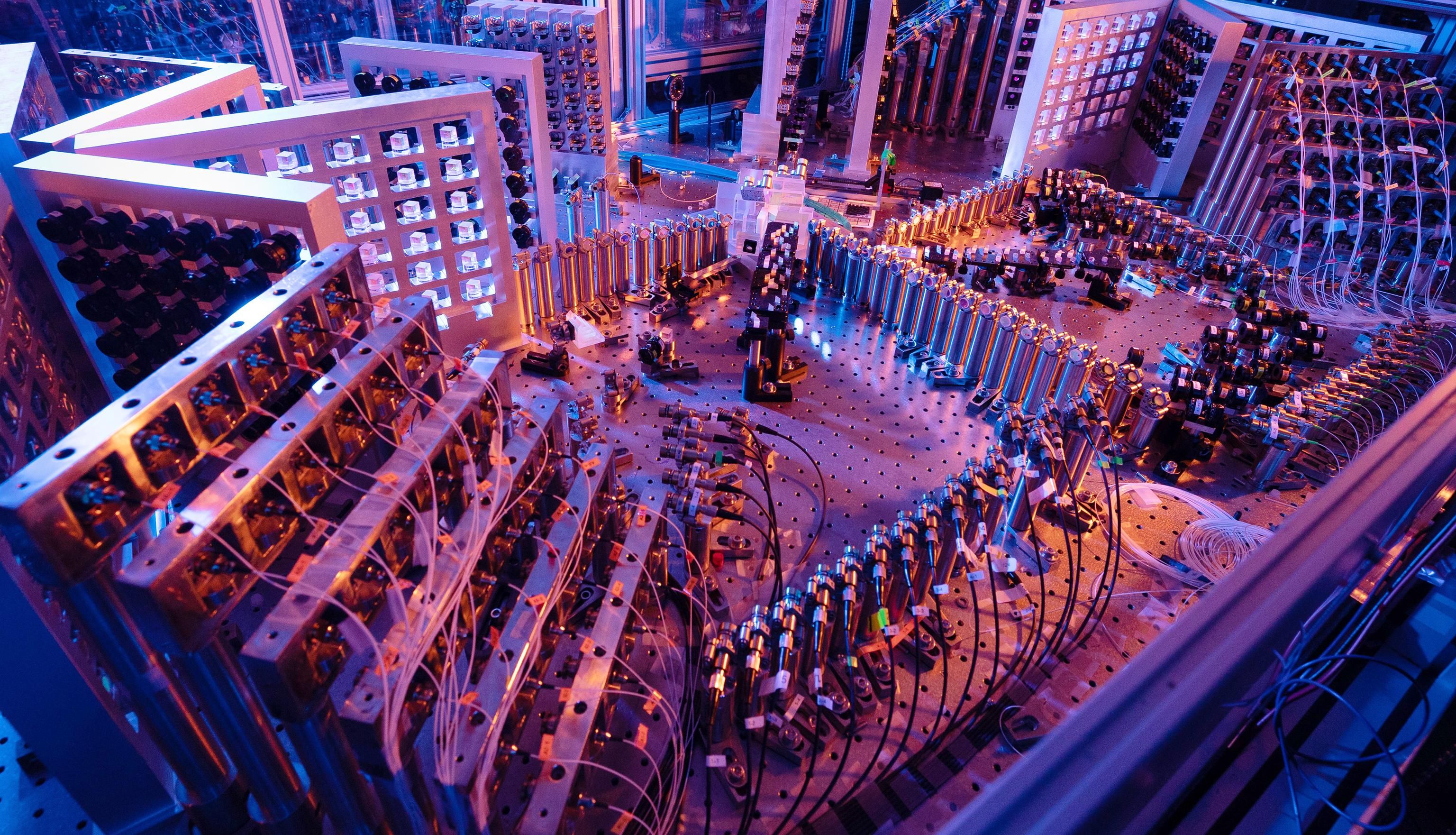
- Quantum hardware: Several companies and institutions have been developing and improving quantum hardware based on different technologies, such as superconducting circuits, trapped ions, photons, and silicon. Some of the leading players include IBM, Google, Microsoft, Intel, IonQ, Rigetti, Xanadu, PsiQuantum, and Alibaba. The number and quality of qubits have been increasing steadily, with IBM aiming to release a 1,121-qubit processor called Condor in 2023 and Google targeting a million qubits by the end of the decade.
- Quantum software: Along with quantum hardware, quantum software is also essential for developing and running quantum algorithms and applications. Several platforms and frameworks have been created to facilitate quantum programming and simulation, such as Qiskit, Cirq, Q#, QAOA, TensorFlow Quantum, and Amazon Braket. Moreover, some open-source libraries and tools have been developed to provide specific functionalities or domains, such as Qiskit Aqua, PennyLane, Forest SDK, and Q# Chemistry.

- Quantum networks: Quantum networks are systems that enable the transmission and processing of quantum information over long distances using quantum channels, such as optical fibers or satellites. Quantum networks could enable distributed quantum computing, quantum key distribution, quantum teleportation, and quantum metrology. Several projects and experiments have been conducted to demonstrate the feasibility and potential of quantum networks, such as the Quantum Internet Alliance in Europe, the China Quantum Network, and the Quantum Internet Demonstrator in the Netherlands.

What are the main challenges and opportunities of quantum computing in 2023?
Quantum computing is still in its infancy and faces many challenges that need to be overcome before it can reach its full potential. Some of the main challenges include:
- Scalability: Scaling up quantum computers to have enough qubits and connectivity to perform useful tasks is a major challenge, as adding more qubits increases the complexity and difficulty of controlling and maintaining them. Moreover, scaling up quantum computers also requires scaling up classical computers and infrastructure to support them, such as cooling, power, and communication systems.

- Error correction: Quantum computers are extremely sensitive to noise and errors, which can degrade or destroy the quantum information stored and processed by them. Error correction is a technique that uses extra qubits and operations to detect and correct errors in quantum computations, but it also consumes a lot of resources and introduces overhead. Finding efficient and robust error correction schemes is a key challenge for building reliable and scalable quantum computers.
- Interoperability: Quantum computers based on different technologies or architectures may have different characteristics and capabilities, such as qubit quality, gate fidelity, connectivity, latency, and cost. Interoperability is the ability of quantum computers to communicate and work with each other, as well as with classical computers and networks. Developing standards and protocols for interoperability is a challenge that requires coordination and collaboration among different stakeholders in the quantum computing ecosystem.
Despite these challenges, quantum computing also offers many opportunities for innovation and impact in various fields and sectors. Some of the opportunities include:
- Discovery: Quantum computing could enable new discoveries and insights in fundamental science, such as physics, chemistry, biology, and astronomy. Quantum computing could also enable new discoveries and innovations in applied science, such as engineering, medicine, agriculture, and energy.
- Efficiency: Quantum computing could improve the efficiency and performance of existing processes and systems, such as optimization, simulation, machine learning, and data analysis. Quantum computing could also enable new processes and systems that are more efficient and effective than classical ones, such as quantum metrology, quantum sensing, and quantum communication.
- Collaboration: Quantum computing could foster collaboration and cooperation among different actors and stakeholders in the quantum computing ecosystem, such as researchers, developers, users, and policymakers. Quantum computing could also foster collaboration and cooperation among different disciplines and domains that could benefit from quantum computing, such as computer science, mathematics, physics, engineering, and social science.
- Education: Quantum computing could enhance the education and training of the current and future workforce in quantum computing and related fields, such as quantum information science, quantum engineering, and quantum software development. Quantum computing could also enhance the education and awareness of the general public and society about quantum computing and its implications, such as ethical, legal, and social issues.