
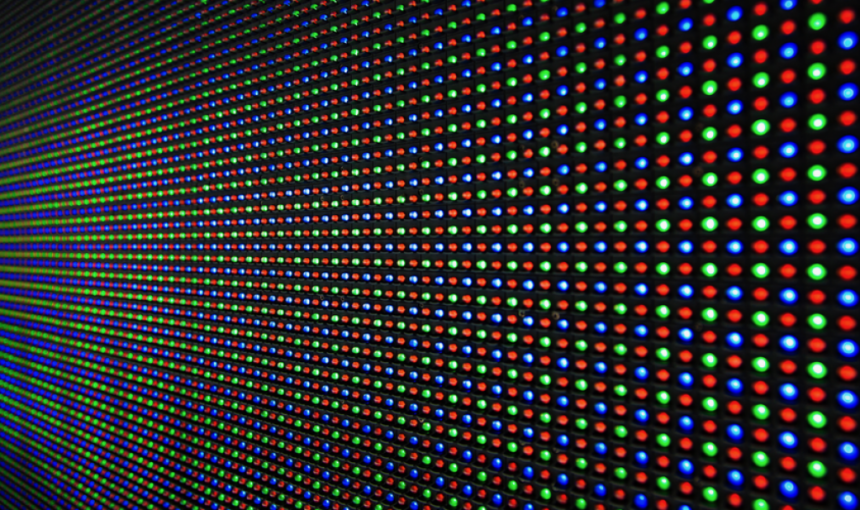
Light-emitting devices are essential for many applications, such as displays, communication, lighting, sensing and biomedicine. However, conventional light sources, such as lasers and LEDs, have some limitations in terms of efficiency, color quality, stability and fabrication cost. In this article, we will introduce a novel type of light-emitting device that combines the advantages of both lasers and LEDs: quantum dot light emitters.
What are quantum dots?
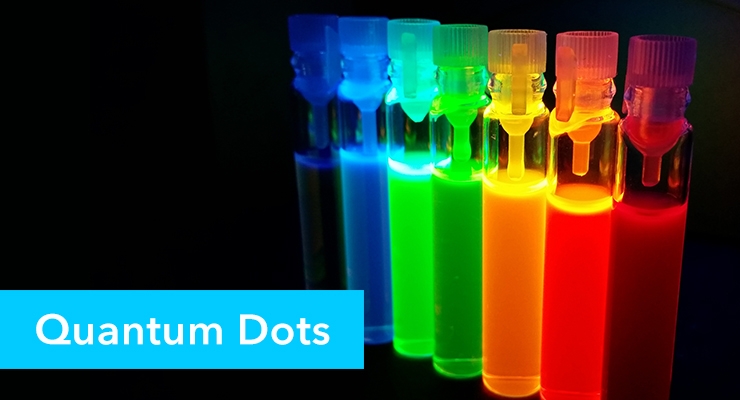
Quantum dots (QDs) are nanometer-sized semiconductor crystals that have unique optical and electronic properties due to quantum confinement effects. QDs can emit light of different colors depending on their size, shape and composition. For example, smaller QDs emit blue light, while larger QDs emit red light. QDs can also absorb light of higher energy and re-emit it at lower energy, a process known as down-conversion.

QDs have several advantages over conventional light sources:
- They have high quantum efficiency, meaning that they can convert most of the absorbed photons into emitted photons.
- They have narrow emission spectra, meaning that they can produce pure and saturated colors with low color crosstalk.
- They have tunable emission wavelengths, meaning that they can cover the entire visible spectrum and beyond by changing their size or composition.
- They have low fabrication cost, meaning that they can be synthesized by simple solution-based methods and deposited on various substrates by printing or coating techniques.
How do quantum dot light emitters work?
Quantum dot light emitters (QDLEs) are devices that use QDs as the active medium to generate light. There are two main types of QDLEs: quantum dot LEDs (QLEDs) and quantum dot lasers (QDLs).
Quantum dot LEDs
QLEDs are similar to conventional LEDs, except that they use QDs as the light-emitting layer instead of organic or inorganic materials. QLEDs consist of a transparent electrode, a hole transport layer, a QD layer, an electron transport layer and a metal electrode. When an electric current is applied, electrons and holes are injected into the QD layer, where they recombine and emit photons.
QLEDs have several advantages over conventional LEDs:
- They have higher brightness and color gamut, meaning that they can produce more vivid and realistic images for display applications.
- They have lower power consumption and longer lifetime, meaning that they can save energy and reduce maintenance costs for lighting applications.
- They have flexible and transparent features, meaning that they can enable novel applications such as wearable devices, foldable screens and smart windows.
Quantum dot lasers
QDLs are similar to conventional lasers, except that they use QDs as the gain medium instead of bulk or quantum well materials. QDLs consist of a QD layer sandwiched between two mirrors that form an optical cavity. When an electric current or an optical pump is applied, electrons and holes are injected into the QD layer, where they undergo stimulated emission and generate coherent light.

QDLs have several advantages over conventional lasers:
- They have lower threshold current and higher output power, meaning that they can operate at lower voltages and achieve higher performance for communication applications.
- They have broader gain bandwidth and temperature stability, meaning that they can operate over a wide range of wavelengths and temperatures for sensing applications.
- They have smaller size and simpler structure, meaning that they can be integrated into compact and complex systems for biomedicine applications.
What are the challenges and opportunities for quantum dot light emitters?
Despite the remarkable progress in QDLEs, there are still some challenges and opportunities for further improvement and innovation.
Some of the challenges include:
- Improving the stability and reliability of QDs and QDLEs under various environmental conditions, such as humidity, oxygen, heat and light exposure.
- Developing efficient and scalable methods for QD synthesis, patterning, deposition and integration into device architectures.
- Enhancing the performance and functionality of QDLEs by optimizing the device design, engineering the QD properties and exploiting the quantum effects.

Some of the opportunities include:
- Expanding the application fields of QDLEs by exploring new materials, structures and functionalities, such as perovskite QDs, micro-LEDs with QDs, QD-based light communication and QD-based biolabels.
- Developing novel QDLE concepts and technologies by combining QDs with other nanomaterials, such as graphene, plasmonic nanoparticles and 2D materials.
- Creating new QDLE paradigms and platforms by leveraging the advantages of both lasers and LEDs, such as QD-based superluminescent diodes, QD-based hybrid light sources and QD-based quantum light sources.
Conclusion
Quantum dot light emitters are a promising technology that can revolutionize the fields of photonics and optoelectronics. By combining the advantages of both lasers and LEDs, QDLEs can offer high efficiency, color quality, stability and fabrication cost for various applications. However, there are still some challenges and opportunities for further improvement and innovation. With the continuous development of QD materials, devices and systems, QDLEs have the potential to create new possibilities and impacts for science, technology and society.